EXAMPLE TESTING
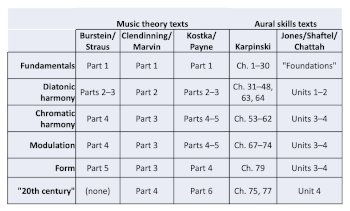
Example 1. Typical music theory topic sequence mapped to recent music theory (left) and aural skills (right) texts
(click to enlarge)
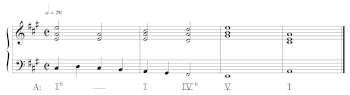
Example 2. Harmonic dictation #38.6 from Karpinski 2017a, demonstrating the potential aural relevance of chord symbols
(click to enlarge)
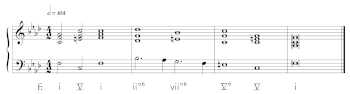
Example 3. Harmonic dictation #42.9 from Karpinski 2017a
(click to enlarge)
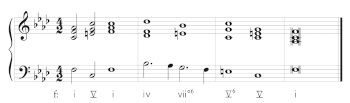
Example 4. The same, with iv substituted for ii°
(click to enlarge)
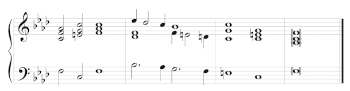
Example 5. The same, with an accented dissonance on the downbeat of m. 2
(click to enlarge)
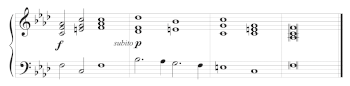
Example 6. The same, with a sudden change of dynamic at the downbeat of m. 2
(click to enlarge)
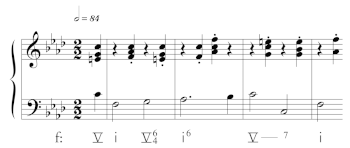
Example 7. The opening of harmonic dictation #73.7 from Karpinski 2017a, featuring the commonly misidentified chord
(click to enlarge)
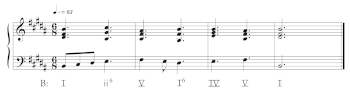
Example 8. Harmonic dictation #42.6 from Karpinski 2017a
(click to enlarge)
Example 9. The repeating four-chord progression in the song “Halo” from the Beyoncé album I Am

(click to enlarge)
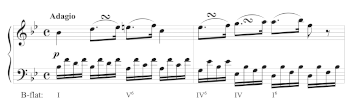
Example 10. The first two measures of Wolfgang Amadeus Mozart, Piano Sonata K. 332, movement II
(click to enlarge)
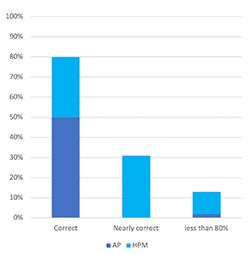
Example 11. Prevalence of Absolute Pitch (AP) and Heightened Tonal Memory (HTM) within each group
(click to enlarge)
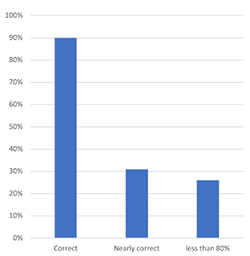
Example 12. Prevalence of piano as primary instrument within each group
(click to enlarge)
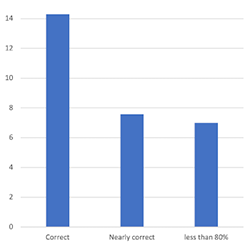
Example 13. Average years of formal training on primary instrument within each group
(click to enlarge)
Example 14. The four-chord progression in the song “Halo” from the Beyoncé album I Am
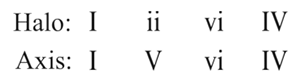
(click to enlarge)
Example 15. Alternative model of aural skills instruction (compare to Example 1)

(click to enlarge)